

EX VIVO Organ CONDITIONING : Introducing TBM‑005
TBM-005 is an ex vivo additive for preservation and perfusion solutions, designed to support organ quality of DCD and other high-risk donor organs exposed to ischemic stress and reperfusion-related challenges.

Protecting organ quality, from recovery to transplant
Targa’s solution
A conditioning additive to support organ quality
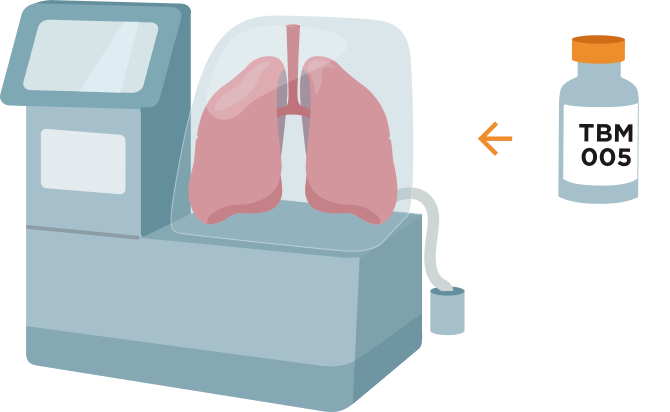
TBM-005 is an ex vivo additive for preservation and perfusion solutions, designed to maintain / protect organ quality and reduce ischemia- and reperfusion-related stress. It is workflow-compatible and temperature-flexible, integrating into existing transplant processes without requiring new equipment or major procedural changes.
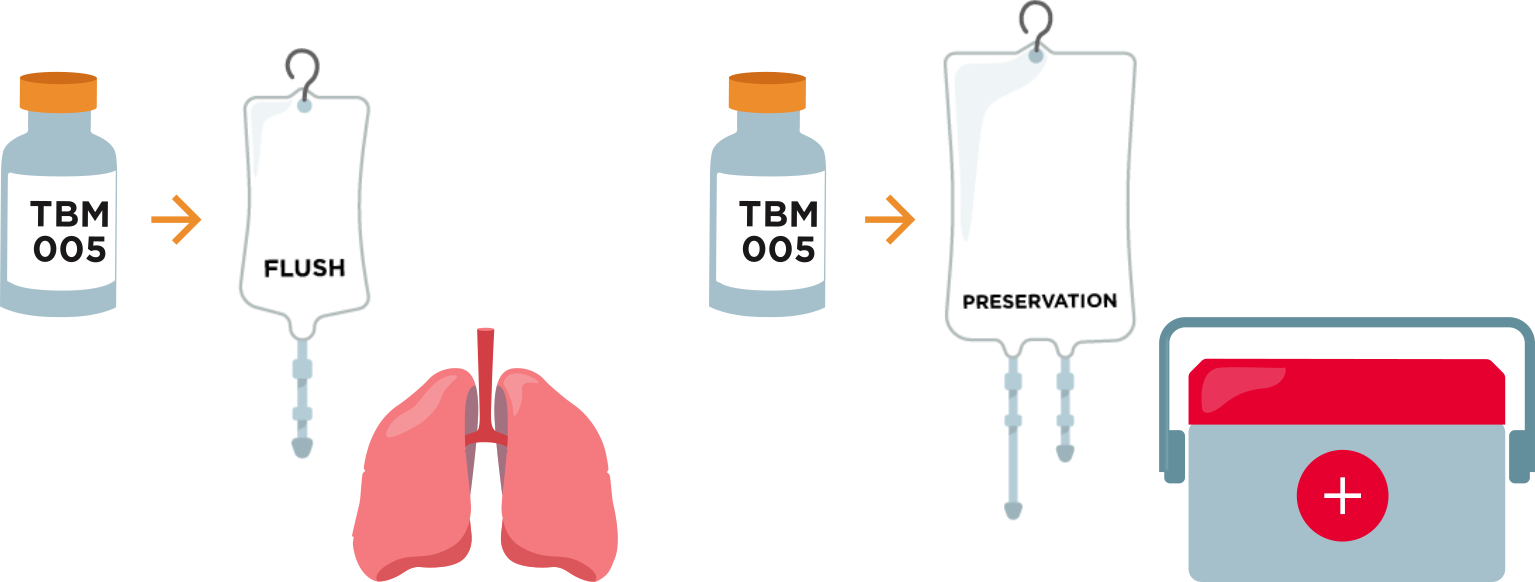
Key Features

- Designed for preservation and perfusion workflows
- Developed as an additive to existing organ recovery and perfusion solutions with no new hardware concept required
- Can integrate into current procurement, storage, and ex vivo perfusion processes with temperature-flexible ex vivo use
- Designed for cold preservation and warm perfusion settings
- Supported by preclinical organ-recovery data
Advancing toward first-in-human
clinical validation
Clinical track record
A clinical execution platform rooted in transplant expertise
The team behind TBM-005 brings the scientific track record, institutional affiliations, and clinical infrastructure required to advance the program toward first-in-human evaluation.
Clinical application
One treatment platform, multiple possibilities

Lung
Advancing toward first-in-human clinical evaluation.

Heart
Compelling data in cardiac preclinical models.

Liver
Compelling data in preclinical models of hepatic preservation/perfusion.

Kidney
Future development opportunity. Evaluation planned through scientific collaboration.
Work with us
Amplifying what your platform can already do
TBM-005 is designed to complement existing preservation and perfusion workflows as an ex vivo organ conditioning additive. It is intended to support organ quality during recovery, preservation, and perfusion without requiring new hardware or major procedural changes.

Frequently
Asked
Questions
Accelerators and Support


